Bold Women Leaders Build the Rooms They Once Needed

Bold Women Leaders Build the Rooms They Once Needed
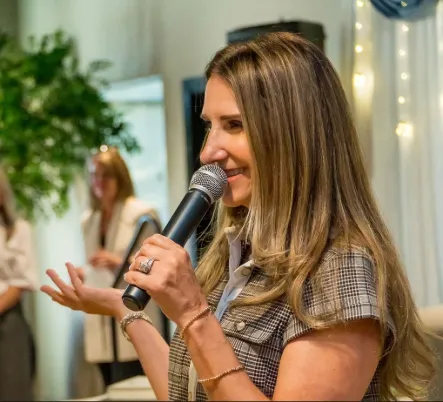
March 8, 2026
Paula Yakubik, Founder & CEO

When I was 25 years old, I started MassMedia with more belief than experience. I didn’t have a deep bench of investors. I didn’t have a legacy name attached to mine. What I had was passion for my craft, a belief in myself and a conviction and willingness to walk into rooms that scared me to death.

Twenty-eight years later, I learned something that no MBA program could have taught me: rooms change everything.

In the early years of building MassMedia in Las Vegas, I spent more time asking for meetings and pushing my way into rooms than being invited to them. I walked into boardrooms filled mostly with men, pitching marketing, advertising and PR with burning ambition and a thick skin I had to grow quickly.

Some rooms felt welcoming. Some scared me to death.

Some rooms felt transactional.  Some rooms were collaborative and life changing.

Some were testing me. Some changed my life forever.

But every room taught me something.

Rooms are where:

Partnerships are formed.

Capital is allocated.

Narratives are shaped.

Confidence is either built or broken.

As a young female founder in the late 1990s I learned quickly that if I wanted to get in the room and have a seat at the table I had to be prepared, sharper, more strategic, and relentlessly results driven. There was no margin for mediocracy.

Over the past three decades MassMedia has grown from a small Las Vegas start-up into an integrated marketing and PR agency with 30 employees and more than $15 million in annual revenue serving major brands nationwide.   But the growth that matters most to me today is not for myself, it is for people.  

It’s the young account executive who found her voice presenting to a very important client. It’s a media buyer, who crafted a buy that delivered results beyond our wildest expectation. It’s the women in my community who are just starting out and the women who I grew up with who now run divisions, departments and companies of their own.

When I started to think about almost 30 years in this business and how I wanted to cross the finish line, it wasn’t about more material possessions, or a profit number. It was about creating a deliberate rooms for women.

This is why I founded the Las Vegas Women’s Marketing Collective. It’s not just an event series; it’s a deliberate room.

A room where:

  • Women at the top of their industry share the truth about leadership.
  • Emerging professionals see what’s possible.
  • Next generation students find access.
  • Collaboration replaces competition.

Because when ambitious women come together, not as rivals but as peers, something shifts. Ideas form. Courage grows stronger. Businesses expand and confidence compounds.

For years, I focused on building rooms for clients: strategic planning sessions, campaign launches, crisis planning rooms.  Today I am equally focused on building rooms for women marketing leaders.

At 25 years old I was trying to prove that I belonged in the room. At 54, I am intentional on who I bring into it. This is the power of experience and the responsibility of leadership. Founding MassMedia taught me resilience and some failures taught me discipline. Building the women’s collective has reminded me of something deeper.

Success is not just about building a company; it is about building people.

Rooms are where that happens.

So, on this International Women’s Day, my message is this:

If you don’t see the room, you need to build it.

If you’re already in the room, widen it.

Rooms shape careers, rooms shape companies and rooms shape communities.

And when women gather with intention, rooms can become movements.

Paula Yakubik is the Founder & CEO of MassMedia and the Founder of the Las Vegas Women’s Marketing Collective.

Recent Articles
Discovery call

We can start right now. Simply complete a quick form and we’ll set up a discovery call to dive deep on your business needs.


Why We Don’t Have a Favorite Channel — And Why That’s Good for Your Business

Why We Don’t Have a Favorite Channel — And Why That’s Good for Your Business

March 2, 2026
Kristen Carter, Media Director

When you hire a media agency, you’re trusting them with your budget. So here’s a question worth asking: Is your agency recommending channels because they’re right for your business — or because they’re profitable for theirs?

At MassMedia, our answer is simple. We don’t have a favorite channel. We never have.

What “Channel Agnostic” Actually Means

Channel agnostic media buying means we have no financial incentive, preferred vendor relationship, or internal bias that pushes us toward any single platform or medium. No quotas to hit on paid social. No sweetheart deals with a programmatic DSP. No pressure to load up on linear TV because it’s easier to buy.

What we do have is a process built entirely around one question: What mix of channels will drive the best results for this specific business, at this specific moment?

That question sounds obvious. But in practice, it’s rarer than you’d think.

The Problem With Agency Channel Bias

Many agencies are structurally incentivized to favor certain channels. This happens in a few common ways:

  • Volume rebates from platforms reward agencies for pushing more spend through specific channels
  • Specialized teams create internal pressure to justify their headcount with client budgets
  • Ease of reporting leads some agencies to favor channels with clean dashboards over channels that actually perform
  • Margin differences mean some media is simply more profitable to buy and manage than others

The result? Clients end up with media plans that look like the agency’s preferred toolkit, not a strategy built around their business goals.

How We Build a Media Mix 

Our media planning process starts with the business, not the channel.

  1. We start with your audience. Before we ever talk about platforms, we map out who your customer is, where they spend their time, and at what stage of the purchase journey they’re most reachable.
  2. We model the full funnel. Awareness, consideration, and conversion all require different media thinking. We plan across the entire funnel rather than defaulting to bottom-of-funnel channels because they’re easier to measure.
  3. We stress-test every channel. We evaluate each option on reach, efficiency, competitive landscape, and how well it complements the rest of the plan. No channel earns a seat at the table just because it’s familiar.
  4. We optimize outcomes, not activity. Our success metrics are yours: revenue, leads, ROAS, brand lift, market share. Not impressions delivered or dollars spent.

What This Looks Like in Practice

A channel-agnostic approach might mean recommending a heavy investment in connected TV for a brand that’s been over-indexed on paid search for years. It might mean pulling back on Meta when the data shows diminishing returns and reallocating to out-of-home in high-priority markets. It might mean the smartest move is a podcast sponsorship, a retail media network, or direct mail — even if those aren’t the sexiest line items on a media plan.

It also means being honest when a channel isn’t working. 

The Business Case for an Unbiased Media Partner

Diversified, audience-first media mixes consistently outperform single-channel or channel-heavy strategies over time. Brands that work with unbiased media partners tend to benefit from:

  • Better budget efficiency — spend goes where it performs, not where it’s easy to place
  • Reduced platform dependency — diversification protects against algorithm changes and rising CPMs
  • Smarter long-term strategy — channel decisions are tied to business stage, seasonality, and competitive dynamics

When your agency’s incentives are aligned with your outcomes, you get better media. It’s that simple.

Our Commitment to Transparency

Channel agnosticism only means something when it’s backed by transparency. That’s why we give clients full visibility into how their media dollars are allocated, what each channel is delivering, and how we’re making optimization decisions. 

If you’ve ever felt like your media plan was shaped more by your agency’s preferences than your brand’s needs, it might be time for a second opinion.

Ready to see what an unbiased media strategy looks like for your business? Let’s talk.

Recent Articles

Discovery call

We can start right now. Simply complete a quick form and we’ll set up a discovery call to dive deep on your business needs.